Past

Distance & Depth

거리와 깊이

2026. 3. 19. - 2026. 4. 18.

[거리와 깊이] 가로형1

크다는 것, 높다는 것은 무엇인가… 재정의해야 비로소 내 삶이 된다.
삶의 크기 · 깊이 · 높이 · 앞뒤


오늘날 한국인 상당수가 바라는 삶은 이런 것이 아닐까. 질병에 시달리지 않고 오래 살 것. 그러기 위해 식단을 조절하고 운동을 하며 영양제를 먹을 것. 이상한 놈으로 찍히지 않게 튀지 않는 나날을 살아갈 것. 그러기 위해 이른바 1000만 영화를 보고, 유행하는 옷을 입고, 맛집을 찾아갈 것. 타인의 시선을 초월하기보다는 타인에게 무시당하지 않을 것. 그러기 위해 그럴싸한 학교에 진학하고 멀쩡해 보이는 직장을 찾을 것. 그 직장은 평생을 보장하지 않을 테니 너무 애태우지 말고 살아갈 것. 그래서 남는 시간에는 주식에 투자하고, 주식이 오르면 기분이 좋아질 것. 장기적인 보람보다는 단기적인 쾌락을 추구할 것. 그러기 위해 쇼츠를 보다가 스르륵 잠이 들 것.

이것은 혹시 작은 삶은 아닌가. 담대한 시도를 통해 불후의 영웅이 되기보다는 무병장수의 삶을 꿈꾼다는 점에서 이 삶은 너무 작을지도 모른다. 이것은 혹시 얇은 삶은 아닌가. 당대의 상상력을 벗어나려 들지 않는다는 점에서 이 삶은 너무 얇을지도 모른다. 이것은 혹시 얕은 삶은 아닌가. 삶의 심해를 탐사하지 않는다는 점에서 이 삶은 너무 얕을지도 모른다. 이것은 혹시 짧은 삶은 아닌가. 오래 인내하기보다는 당장의 자극에 반응한다는 점에서 이 삶은 너무 짧은 호흡의 삶일지도 모른다.

2026년 에이라운지에서 열린 심아빈의 전시 ‘거리와 깊이’는 말한다. 그러한 동시대적 삶을 다시 생각해 보라고.
“거리와 깊이는 공간의 길이를 나타내는 단위로, 거리가 수평적 길이라면 깊이는 수직적 길이이다. 삶이라는 공간에는 출발점(탄생)에서부터 종착점(죽음)까지의 거리와, 그 과정에서의 진실성과 충실함에 기반한 깊이가 있다.”
인간은 태어나서 어떤 체적의 존재로서 어떻게 나아가다가 결국 죽음에 이르는가. 그리고 그 여정은 얼마나 길고 얼마나 깊은가. “그러한 거리와 깊이의 합”이 바로 삶이기에, 이 전시의 주제는 삶 그 자체라고 해도 과언이 아니다.

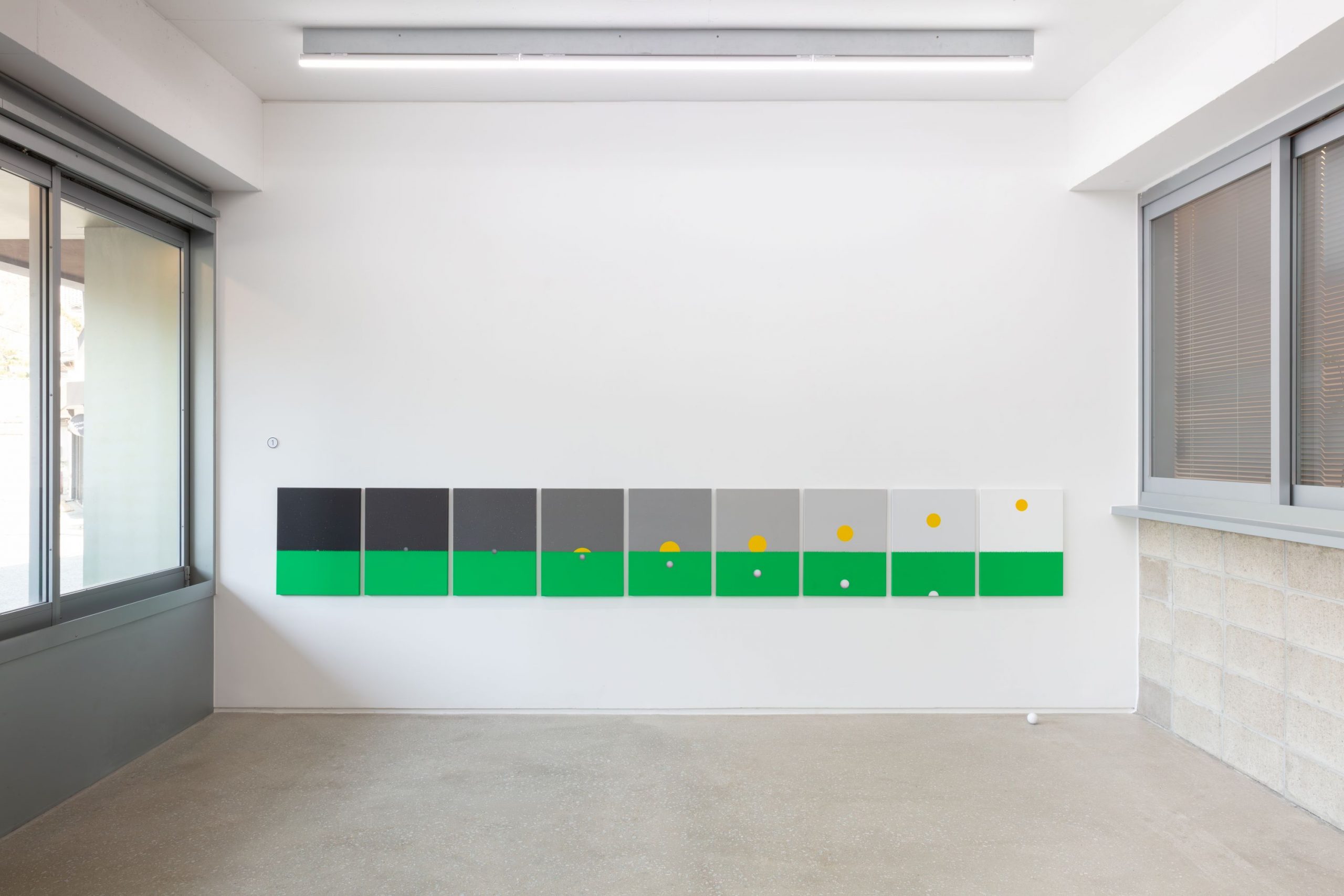
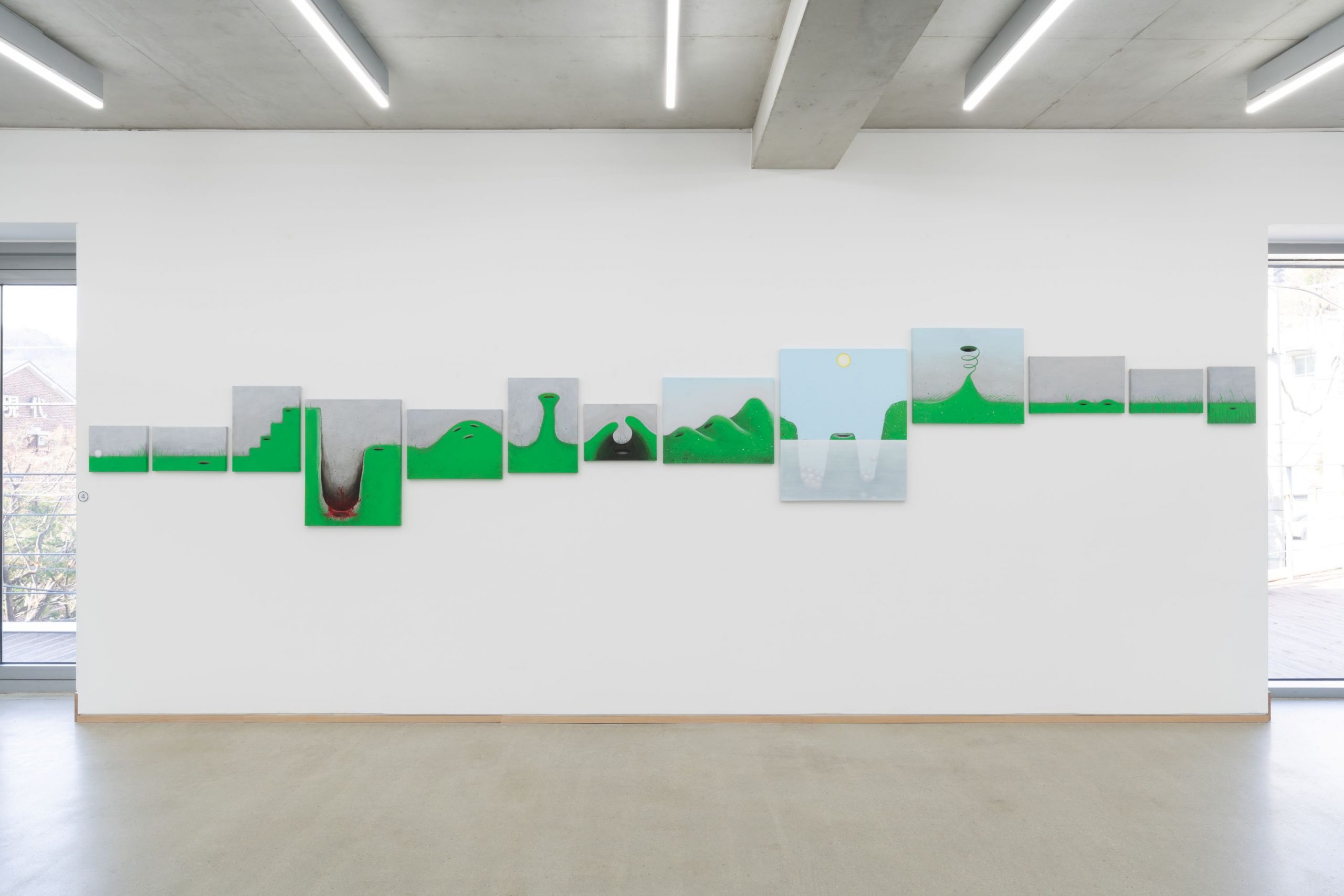
삶의 거리와 깊이를 다루는 전시답게 인생을 골프 코스에 비유한 작품들이 전시 전반부를 차지한다. 심아빈의 골프 코스는 생각보다 길다. 골프공이 종종 골프 코스 밖을 벗어나듯이, 작품 속 골프공은 화폭을 벗어나 심지어 전시장 바닥으로 떨어지기도 한다. 인생은 생각보다 길고 예측불허이며 때로는 궤도에서 이탈하기 마련이라는 말을 하고 싶었던 것일까.

심아빈의 골프 코스는 예상보다 깊다. 골프공이 들어가는 구멍인 홀은 입체감 있게 묘사돼 있는데, 가까이 다가가 보면 작가가 실제로 캔버스에 구멍을 냈음을 알 수 있다. 그러니 그것은 그려진 구멍인 동시에 실제 구멍이다. 인생에는 빠지면 정녕 헤어 나오기 어려운 구멍이 가득하다는 말을 하고 싶었던 것일까.

작가의 인생관을 집약하는 것은 무엇보다 ‘18홀’이다. 이 작품은 고난도의 골프 코스를 묘사한 것으로, 장애물이 많으니 승부가 뒤바뀌기 쉽고, 되돌아갈 수 없으니 실수를 회복하기도 어렵고, 어렵다 보니 긴장도가 높고, 긴장도가 높다 보니 의외의 드라마가 만들어진다.

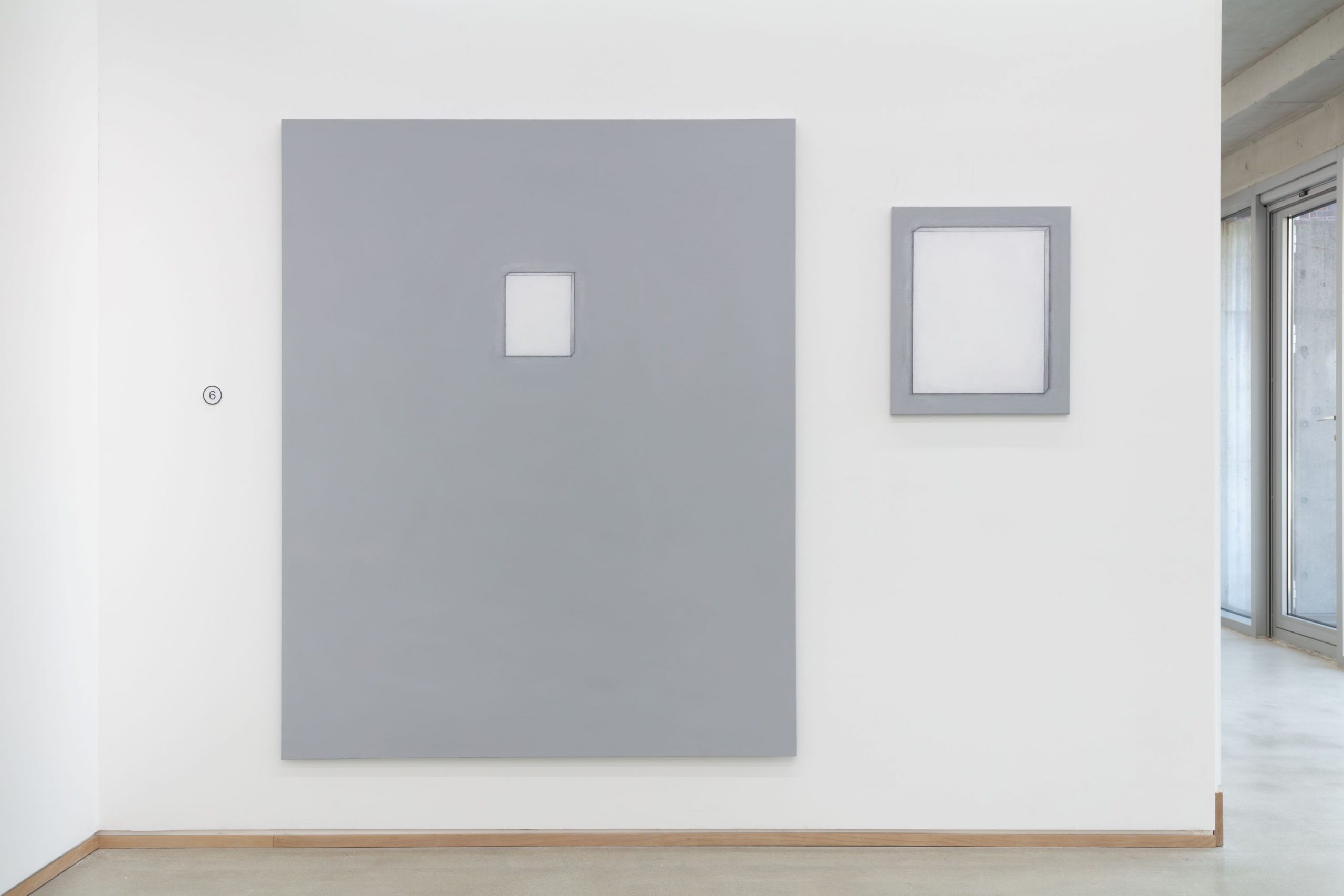
이 18홀 같은 인생을 어떻게 살아야 하나. ‘크기에 대한 고찰’, ‘깊이에 대한 고찰’, ‘높이에 대한 고찰’ 연작이 이 질문에 답한다.
이 시대의 삶이 너무 작아 보이면, 위대한 삶을 살아보자고 선동할 수 있다. 이 시대의 삶이 너무 얇아 보이면, 두터운 삶을 살아보자고 권면할 수 있다. 이 시대의 삶이 너무 얕아 보이면, 고매한 삶을 살아보자고 촉구할 수 있다. 그러나 그것은 야망을 부추기려는 졸업식 축사나 윤리를 가르치려는 교장 선생님의 훈화나 영혼을 위로하려는 종교 지도자의 설교에나 어울리는 것들이다. 그 대신 심아빈의 작품들은 (삶과 세계의) 크기, 깊이, 높이에 대해 다시 묻는다.

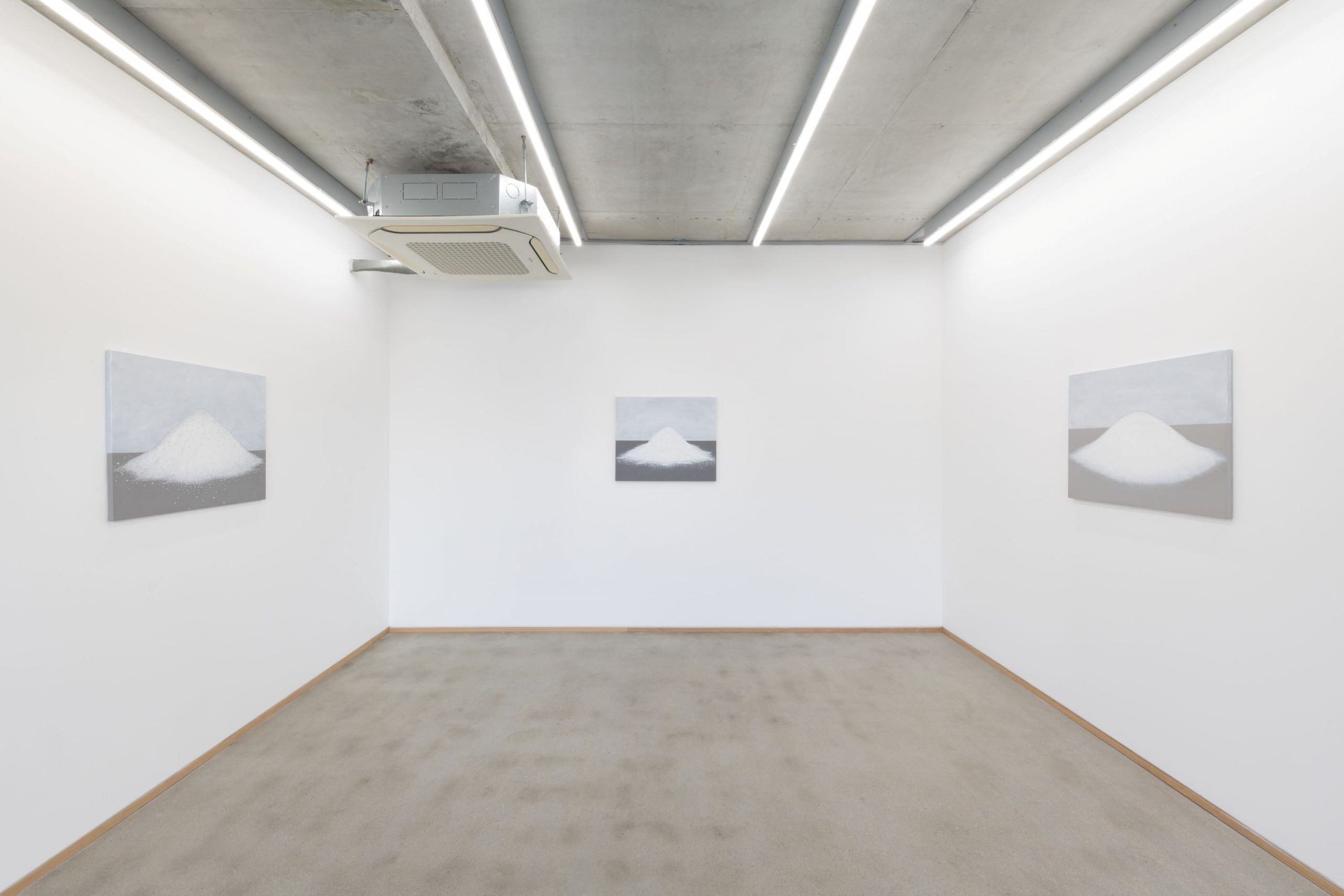
‘높이에 대한 고찰’을 구성하는 두 그림을 보라. 왼쪽 캔버스는 높지만 그 캔버스에 그려진 물체는 낮다. 오른쪽 캔버스는 낮지만 그 캔버스에 그려진 물체는 높다. 그러니 우리는 그중 어느 것이 더 높은지 확언할 수 없다. ‘크기에 대한 고찰’의 두 그림을 보라. 왼쪽 캔버스는 크지만 그 캔버스에 그려진 물체는 작다. 오른쪽 캔버스는 작지만 그 캔버스에 그려진 물체는 크다. 그러니 우리는 그중 어느 것이 더 큰지 자신할 수 없다.

‘깊이에 대한 고찰’을 이루는 두 그림을 보라. 왼쪽 캔버스는 얇지만 그 캔버스에 그려진 물체는 두텁다. 오른쪽 캔버스는 깊고 두텁지만 그 캔버스에 그려진 물체는 얇다. 그러니 우리는 그중 어느 것이 더 깊고 두터운지 결정할 수 없다. 어디 크기, 깊이, 높이뿐이랴. 전시의 마지막 작품 ‘앞을 향해 뒤를 보여주는 캔버스’는 앞과 뒤마저 고찰한다. 캔버스의 뒷면을 그린 이 작품에서 우리는 작품의 앞을 보고 있는 것일까, 뒤를 보고 있는 것일까. 무언가의 뒷모습을 보고 있지만, 그것은 작품의 앞면이기도 하다.

선동가의 꿈은 당신을 동원하는 것이고, 출마자의 꿈은 당신의 표를 얻는 것이다. 창업자의 꿈은 당신의 투자를 유치하는 것이며 사기꾼의 꿈은 당신을 갈취하는 것이다. 그러나 예술가는 다르다. 예술가의 꿈은 당신으로 하여금 당신 자신의 삶을 살게 만드는 것이다. 그래서 심아빈은 관객에게 특정한 삶을 제시하는 대신, 삶의 높이와 깊이와 넓이와 앞뒤에 대해 다시 생각해 보라고 권한다. 그의 그림들 중 어느 것이 크고, 깊고, 높다고 판정하려면 크기와 깊이와 높이를 관객 스스로 다시 정의할 수밖에 없다.

그렇게 재정의하는 행위를 통해 다름 아닌 관객 자신이 달라진다. 전시장에 들어설 때 그는 대상의 크기, 깊이, 높이, 앞뒤를 당연시하는 사람이었다면, 전시장을 나올 때 그는 높이와 깊이와 넓이와 앞뒤를 정의하는 사람으로 변한다. 이제 그는 집에 돌아가 쇼츠를 보면서 물을지도 모른다. 이 쇼츠는 과연 짧은가. 짧다는 것은 대체 무엇인가. 이렇게 묻는 과정에서 그는 삶의 길이와 깊이에 대해 생각하게 되고, 자기 삶을 보다 입체적으로 상상하게 되며, 결국에는 자기 삶의 스타일을 발명하게 될 것이다.


글/ 김영민(서울대학교 정치외교학부 교수, 사상사 연구자, 예술평론가)

What Does It Mean to Be Large, or to Be High? Life Only Becomes Mine When Redefined.
Size · Depth · Height · Front & Back of Life


Is this not the life many Koreans desire today? To live long without illness. To diet, exercise, and take supplements in order to do this. To live without standing out, so as not to be labeled an oddball. But also to avoid being ignored, rather than transcending the gaze of others. To watch the latest blockbuster movies, wear the hippest clothes, and visit the most popular restaurants. To get accepted to a respectable school and find an important-looking job. To live without too much anxiety, knowing that the job won't last a lifetime. To invest in stocks and feel good when they rise. To seek short-term pleasure rather than long-term fulfillment. And for that purpose, to drift off to sleep while scrolling through ‘Shorts.’

Is this not a small life? Maybe too small, in that it dreams of longevity rather than seeking immortality through bold endeavors. Is it not a thin life? Too thin in its refusal to step outside the imagination of the era. Is it not a shallow life? Too shallow for failing to explore the deep seas of existence. Is it not a short life? A life of short breaths spent reacting to immediate stimuli rather than enduring for the long haul.

Ah-Bin Shim’s exhibition Distance & Depth at A-Lounge Contemporary in 2026 speaks to this. It asks us to reconsider such contemporary lives.
"Distance and depth are units that represent the length of space; if distance is horizontal, depth is vertical. In the space of life, there is the distance from the starting point (birth) to the end (death), and the depth based on the sincerity and faithfulness within that process.”
How does a human being, as an existence of a certain volume, move forward after birth and eventually reach death? And how long and how deep is that journey? Given that life is the "sum of such distance and depth," it is no exaggeration to say that the theme of this exhibition is life itself.

Appropriately for an exhibition dealing with life's distance and depth, the first half features works comparing life to a golf course. Ah-Bin Shim's golf course is longer than one might think. Just as a golf ball often veers off-course, the balls in these works leave the canvas and even fall to the gallery floor, reminding us that life is longer and more unpredictable than expected, prone to deviating from its trajectory.

Ah-Bin Shim's golf course is deeper than expected. The hole where the ball enters is depicted with a sense of three-dimensionality; upon closer inspection, one realizes the artist has actually cut a hole in the canvas. Thus, it is both a painted hole and a real one, suggesting that life is full of holes that are truly difficult to escape once you fall in.

Depicting a golf course of the greatest difficulty, 18 Holes is a true embodiment of the artist’s worldview. Because there are many obstacles, the lead can easily flip. Because each stroke is irreversible, it is difficult to recover from mistakes. Because the course is difficult, tension is high—and from that tension, unexpected dramas are born.

How should one live this "18-hole" life? That question is addressed in the series Contemplation on Size, Contemplation on Depth, and Contemplation on Height. If life today seems too small, we might be urged to live a "great" life. If it seems too thin, we might be prompted to pursue an "expansive" life, and if it seems too shallow, one might be encouraged towards a "noble" life. But such words belong to graduation speeches, principals’ lectures, or religious sermons. Instead, Ah-Bin Shim's works ask again about the size, depth, and height of life and the world.

Look at the two paintings that make up Contemplation on Height. The canvas on the left is relatively tall, but the object painted on it is short. The canvas on the right is shorter, but the object painted on it is taller. Therefore, we cannot say for certain which is greater in height. Similarly, in Contemplation on Size, the large canvas on the left shows a very small object, while the smaller canvas on the right shows a larger object, making it difficult to determine which is truly bigger.

Once again, in Contemplation on Depth, the canvas on the left is physically thinner than the one on the right, but the object it depicts is thicker than its counterpart on the right. As such, we cannot decide which is deeper. It is not just about size, depth, and height. Finally, A Canvas Facing Forward with Back Showing contemplates the nature of front and back. In this work depicting the back of a canvas, are we looking at the front or the back? We clearly see the back of something, yet it is also the front of the artwork.

The dream of a demagogue is to mobilize you, and the dream of a candidate is to win your vote. The dream of a founder is to attract your investment, and the dream of a swindler is to extort you. But an artist is different. The artist's dream is to let you live your own life.

Instead of presenting a specific way of living, Ah-Bin Shim invites the audience to rethink the height, depth, width, and front and back of life. To judge which of these paintings is larger, deeper, or taller, viewers have no choice but to redefine those dimensions for themselves.

Through that act of redefinition, the viewers themselves change. While they might take these concepts for granted before entering the gallery, they leave as people who seek to define height, depth, width, front, and back. Back at home, when they return to watching ‘Shorts,’ they might ask, "Is this ‘Short’ really short? What does 'short' even mean?" Through this process of questioning, they begin to imagine life in three dimensions and eventually invent their own style of living.


Text/ Youngmin Kim(Professor in the Department of Political Science and International Relations at Seoul National University, Intellectual Historian, and Art Critic)


심아빈 ≪거리와 깊이 Distance & Depth≫ 1층 전시전경 - A-Lounge Contemporary (1) 저화질

Installation View_Distance & Depth

심아빈 ≪거리와 깊이 Distance & Depth≫ 2층 전시전경 - A-Lounge Contemporary (7) 저화질

Installation View_Distance & Depth v

심아빈 ≪거리와 깊이 Distance & Depth≫ 2층 전시전경 - A-Lounge Contemporary (1) 저화질

Installation View_Distance & Depth

심아빈 ≪거리와 깊이 Distance & Depth≫ 2층 전시전경 - A-Lounge Contemporary (11) 저화질

Installation View_Distance & Depth

심아빈, 크기에 대한 고찰_큰 그림과 작은 그림, 2026, Acrylic and pencil on canvas, 162.2x130cm, 53x45.4cm 저화질

Installation View_Distance & Depth