Past
Para-Jagi
파라-자기
2026. 1. 17. - 2026. 2. 21.
![[파라-자기] 가로형4_갈색3](https://a-lounge.kr/wp-content/uploads/2025/12/파라-자기-가로형4_갈색3.jpg)
“진실과 허위는 얼굴도 비슷하고, 태도나 맛, 거동도 닮아 있다. 우리는 그것들을 같은 시선으로 바라본다. 내 생각에 우리는 속임수로부터 우리를 지키는 데 느슨할 뿐만 아니라, 우리를 그 칼에 찔리게 하려고 부러 애를 쓰고 있다. 우리는 허공에 섞여 들기를 좋아하니 우리 자신의 존재가 허공과 닮아 있는 탓이다.”1
미셸 드 몽테뉴
몽테뉴는 『에세』 제3권 11장 「절름발이에 관하여」에서 이 문장을 통해 우리 인간의 인지 능력이 얼마나 조야하고 둔탁한지를 지적한다. 그가 해당 장을 작성하는 데 바탕이 된 것은 16세기 프랑스에서 벌어진 마르탱 게르 사건으로, 아르노 뒤 틸이 오랫동안 집을 떠났던 마르탱 게르를 자처하며 그의 행세를 하고 그의 삶을 대신 살아가려 했던 이야기다.2 마을 공동체가 아르노가 마르탱이라 속은 이 일을 통해 몽테뉴는 진실과 허위를 분별하려는 우리의 판단은 언제나 불완전하며 인간의 인식과 판단이 본질적으로 취약하다는 것을 말하고자 한다. 그러나 이 사건의 핵심은 정체성이 어떤 조건 아래에서 구성되고 승인되는지, 진실과 허위가 거의 구분되지 않은 채 동일한 방식으로 작동할 수 있음을 보여줌에 있다. 문제는 판단의 실패가 아니라, 경계 자체가 언제나 불안정하다는 데 있다.
≪파라-자기≫ 전시는 이러한 불안정한 경계 상태를 ‘para-’라는 접두사를 통해 사유한다. ‘파라-’는 그리스어 전치사에 기원한 접두사로 함께, 옆에, 나란히란 의미와 불복종하고 위반하는 의미를 동시에 가지고 있다. ‘파라-’는 뒤에 나오는 단어와 범주에 속하지 않음에도 불구하고 그 범주가 갖는 힘과 효과를 거의 동일하게 수행하는 상태를 지칭한다. 외부에 있으나 주변을 맴돌고, 모방이지만 원본처럼 작동하며 타자의 욕망이지만 나 자신의 것처럼 감각되는 것이다. 한국어에서 ‘자기’는 나 자신을 가리키기도 하고 연인을 지칭하기도 하며, 때로는 그저 지금 내 말을 듣고 있는 상대방을 부르는 말이기도 하다. 이러한 지점은 마치 우리가 결코 단일하고 완전한 단 하나의 ‘자기’로만 존재하지 않는다는 사실과 닮아 있다. ‘자기’는 항상 여러 층위와 관계 속에 있으며 단일한 존재로 완전히 고정되지 않는다.
다안 쿠자인 (Daan Couzijn, b. 1994)은 진품과 위조품, 원본의 아우라와 기술적 재현, 작가성의 경계를 교란한다. 경매를 통해 얻은 앤티크 회화에서 분리된 안료와 바니쉬는 새로운 앤티크 가구와 캔버스 위로 옮겨지며, 원본의 아우라는 더 이상 하나의 기원과 작품에 고정되지 않는다. 또한 인공지능을 통해 17-18세기 네덜란드 전통 회화에 기반한 풍경 이미지를 대규모 데이터로 축적하고 생성된 이미지를 바탕으로 위조품 제작자에 의해 그려진 Thinking of Holland 시리즈는 작가성과 제작주체를 모호하게 만든다. 그의 작업은 원본이 가지는 아우라가 더 이상 원본에만 귀속되지 않는 상태를 드러낸다. 그의 작품에 진품성이 있다고 봐야하는가, 이 작품을 다안의 작품이라 볼 수 있는가. 원본은 아니지만, 원본이 작동하는 방식을 그대로 수행하는 그의 작품은 해당 질문에 답을 던지고 해결하려하기보다, 오히려 이 질문이 더이상 유효하지 않은 지점을 가리킨다.
Z.T. 응우옌 (Z.T. Nguyễn, b. 1997)은 정지와 변화, 내부와 외부, 가능성과 불가피성 사이에 놓인 경계 위의 긴장 상태를 다룬다. 그의 드로잉 작업은 8.5×11인치 규격의 종이를 주 매체로 삼는데, 이는 미국과 캐나다, 중남미 대부분의 지역에서 사용되는 표준 레터 사이즈이다. 삶의 이동과 정체, 승인과 보류를 판별하는 망명 신청서, 시민권 신청서 등에도 사용되며 일상적인 편지, 메모에도 사용된다. 응우옌은 이 종이를 접고, 겹치고, 쉽게 옮길 수 있는 상태로 유지한다. 이는 종이가 담고 있는 제도적 권위과 규정의 힘 안에서, 그 힘이 결코 단단하게 고정되지 않음을 드러내는 방식이 된다. 그의 작업에 반복적으로 등장하는 별과 모기는 이러한 경계의 불안정성을 시각적으로 응축한다. 무한한 외부를 가리키는 자연적 별과 정치적 기호로 압축된 오각별 사이의 간극은 규정과 상징이 어떻게 생성・번역되는지를 보여주며, 해롭고 배제되어야 할 존재로 인식되는 모기는 동시에 제거될 수 없는 조건으로 남아 있는 타자의 형상을 띤다.
조이솝 (b. 1994)은 ‘파라-자기’의 구조를 정체성 내부로 끌어온다. 욕망의 출처가 불분명해진 주체, 타자의 욕망을 내재화한 주체는 그 분열을 인식하면서도 동시에 이를 유지한다. 그의 ‘자기’는 분열되었지만 하나처럼 작동하며 붕괴하지 않는다. 온라인에서 수집한 이미지, 레이스, 비즈, 샤워호스, 일기장 등 서로 다른 성격의 재료들은 서로 엮이거나 뒤엉켜 하나의 덩어리이자 작품을 이루고 때로는 공중에 매달린 형태로 제시된다. 조이솝은 주관과 객관 사이의 모순과 불확실성의 세계를 사유하며, 그가 사랑한 사람과 사물 속에서 자신의 욕망과 감정의 흔적을 되짚는다. 이때 ‘자기’는 외부로부터 위협받는 상태가 아니라, 이미 타자의 흔적이 스며든 상태로 구성된다. 그의 작업은 자기와 타자, 나의 감정과 타인의 욕망이 구분되기보다 겹쳐진 상태로 작동하고 있음을 드러낸다.
≪파라-자기≫는 서로 상반되는 상태, 원본이 아니지만 원본처럼 작동하는 상태가 동시에 존재할 수 있음을 보여주고자 한다. 경계가 완전히 사라졌다고 선언하기보다, 오히려 경계가 여전히 작동하고 있음을, 그러나 우리가 이 경계를 인식하면서도 반복적으로 넘나들 수 있다는 사실을 드러내고자 한다.
1) 미셸 드 몽테뉴, 『에세 3』[eBook], 최권행 역 (민음사, 2022), 크레마 페블 기준 650.
2) 마르탱 게르 사건은 1560년 프랑스에서 실제로 일어난 신분 사칭 재판 사건을 말한다. 아르티가라는 지역에 살던 마르탱 게르(Martin Guerre)라는 농부는 베르트랑드를 아내로 맞고 10년 후 갑자기 집을 떠나 실종된다. 수년이 지난 뒤 자신이 마르탱 게르라고 주장하는 한 남자가 나타난다. 그는 마을 사람들의 이름, 마을 일, 은밀한 가족사, 부부 사이의 일까지 구체적으로 알고 있어 아내를 포함한 가족과 마을 사람들 대부분이 그를 진짜 마르탱 게르라고 믿었다. 그러나 마르탱의 삼촌인 피에르의 의심을 시작으로, 새로 나타난 마르탱의 발크기가 사라진 마르탱의 것보다 작다는 구두쟁이의 의문, 진짜 마르탱이 살아있다는 소문 등은 그가 진짜 마르탱 게르인지를 가리는 법정 재판으로 이어졌다. 무죄 판결이 내려지기 전 재판장에 의족을 찬 진짜 마르탱 게르가 등장하면서 돌아온 남자는 아르노 뒤 틸이라는 사기꾼임이 드러났다. 이 일은 당시 유죄 판결을 내린 판관이었던 장 드 코라스가 재판 과정을 상세히 기록한 책을 출간하면서 처음 알려졌다. 정체성, 기억 등이 얼마나 불확실한지를 보여주는 대표적인 사례로 역사・문학에서 자주 다뤄진다.
글/ 김다혜 (에이라운지)
“Truth and lies are face alike; their port, taste, and proceedings are the same, and we look upon them with the same eye. I find that we are not only remiss in defending ourselves from deceit, but that we seek and offer ourselves to be gulled; we love to entangle ourselves in vanity, as a thing conformable to our being.”1
- Michel de Montaigne
In these sentences in Les Essais Volume 3, Chapter 11, Des boiteux (Of Cripples), Michel de Montaigne observes how human cognitive capability is crude and dull. This chapter is based on the Martin Guerre incident in 16th-century France, when Arnaud du Tilh impersonated and proclaimed himself to be Martin Guerre, who had vacated his home for a long period, and attempted to live as Martin.2 Through this incident, where the townspeople were deceived into thinking Arnaud was Martin, Montaigne asserts that our judgment to discern truth and falsehood is always imperfect, and that human perception and judgment are fundamentally fallible. However, the core of this incident lies in the fact of how identity is comprised and approved under certain circumstances, and how truth and falsehood function in equivalent ways, nearly indiscernible. The issue is not just that judgment fails, but that the borderline itself is always unstable.
The exhibition, Para-Jagi, examines this uncertain borderline status using the prefix ‘para-.’ Originating from a Greek preposition meaning ‘together’, ‘beside’, or ‘side by side’, ‘para-’ also carries meanings of being ‘defiant’ and ‘transgressive. ‘ While the prefix does not belong to the subsequent word and category, it refers to a state that exerts power and effect equivalent to that category’s own. It belongs to the outside world yet hovers in the vicinity; it functions as an original despite being an imitation; it is perceived as one’s own desire while belonging to another. In Korean, the term ‘jagi (자기)’ refers to oneself, a partner, or sometimes addresses ‘the other’ who is listening to one’s words. This concept is akin to the fact that we never exist as single, complete, or one-and-only ‘jagi. ‘ Instead, ‘jagi’ always exists in multiple layers and relationships, not completely fixed as a singular existence.
Daan Couzijn (b. 1994) disrupts the borderline between original and imitation, the aura of the original and technical recreation, and authorship. Pigment and varnish separated from antique paintings acquired at auction are transferred to new antique furniture and canvases. The aura of the original is no longer fixed to a single origin and artwork. Additionally, the Thinking of Holland series—painted by an art forger based on the images created with large-scale data of 17-18th-century traditional Netherlands paintings’ landscape accumulated by AI—renders the authorship and the agency of production ambiguous. His artworks showcase a state where the aura of the original works does not belong solely to the original. The questions are: can we view the artworks as having authenticity, or can we view them as the works of Daan? While they are not original artworks, they implement the same way the original functions. They point to a state where these questions are no longer valid, rather than attempting to answer and address them.
Z.T. Nguyễn (b. 1997) addresses a tensed state on the borderline between stasis and flux, interior and exterior, possibility and inevitability. The primary media for his drawings are 8.5 x 11 in. papers—the size for standard letters in the United States, Canada, and most of Latin America. This paper is used for asylum and naturalization applications, which determine the migration, stagnation, approval, and pending state of life. It is also used for casual letters and notes. Nguyễn folds and stacks the paper, maintaining it in an easily movable state. It is a way to represent that, within the institutional authority and power of regulation that exist in the paper, the power is never firmly fixed. The stars and mosquitoes, repeatedly featured in his works, visually condense the instability of these borderlines. The gap between the star in nature (indicating the infinite exterior) and the five-pointed star (condensed with political symbols) showcases how regulation and symbols are created and translated. A mosquito, while perceived as a harmful organism meant to be excluded, is manifested as a form of ‘the other’, remaining as the condition that cannot be removed.
Leesop Cho (b. 1994) incorporates the structure of ‘Para-Jagi’ within identity. The subject, with an obscure source of desire and an internalized desire of the other, perceives a fracture but also sustains it. The ‘jagi’ is fragmented but functions as one, not disintegrating. Materials of different natures—images collected online, lace, beads, shower hose, and diaries—form a single mass and an artwork, entangled and intertwined, sometimes suspended in the air. He contemplates a worldof contradiction and uncertainty between subjectivity and objectivity, reflecting on traces of his desire and emotion within his loved ones and objects. ‘Jagi’, in this regard, is not a state that is threatened externally, but a state that is already permeated with traces of the other. His works reveal that oneself and the other, one’s emotion and the other’s desire, are not differentiated and function as an intersected state.
Para-Jagi attempts to present that states of contradiction—states that function as an original despite not being an original—can coexist. Rather than declaring that borderlines have all disappeared, it suggests the borderlines are still at their work, while we perceive the borderlines and can repeatedly traverse between them.
1)Michel de Montaigne, The Essays of Montaigne, trans. Charles Cotton (Project Gutenberg, 2001), Chapter XI, “Of Cripples,” para. 4, https://www.gutenberg.org/files/3600/3600-h/3600-h.htm#link2HCH0104.
2) The Martin Guerre incident is a real impersonation trial case that occurred in France in 1560. Martin Guerre, a peasant in the village of Artigat, suddenly vanished after 10 years of marriage to his wife Bertrande. Several years later, a man claiming to be Martin Guerre appeared. His family, his wife, and the majority of the villagers believed he was Martin Guerre as he was aware of specifics, including the villagers’ names, village affairs, private family and marital matters. However, from the suspicion of Martin’s uncle Pierre, thedoubts of a shoemaker who suspected the foot of the new Martin was smaller than before, rumors arose that the real Martin was alive. It led to a court trial to verify if he is the real Martin Guerre. Before a verdict of acquittal was reached, the real Martin Guerre returned with a prosthetic leg, exposing that the returned man was in fact an imposter named Arnaud du Tilh. This incident was brought to light after the judge, Jean de Coras, published a book with detailed records of the trial. It is a prime example frequently used in the subjects of history and literature, which demonstrates how identity and memory.
Text/ Dahye Kim (A-Lounge Contemporary)
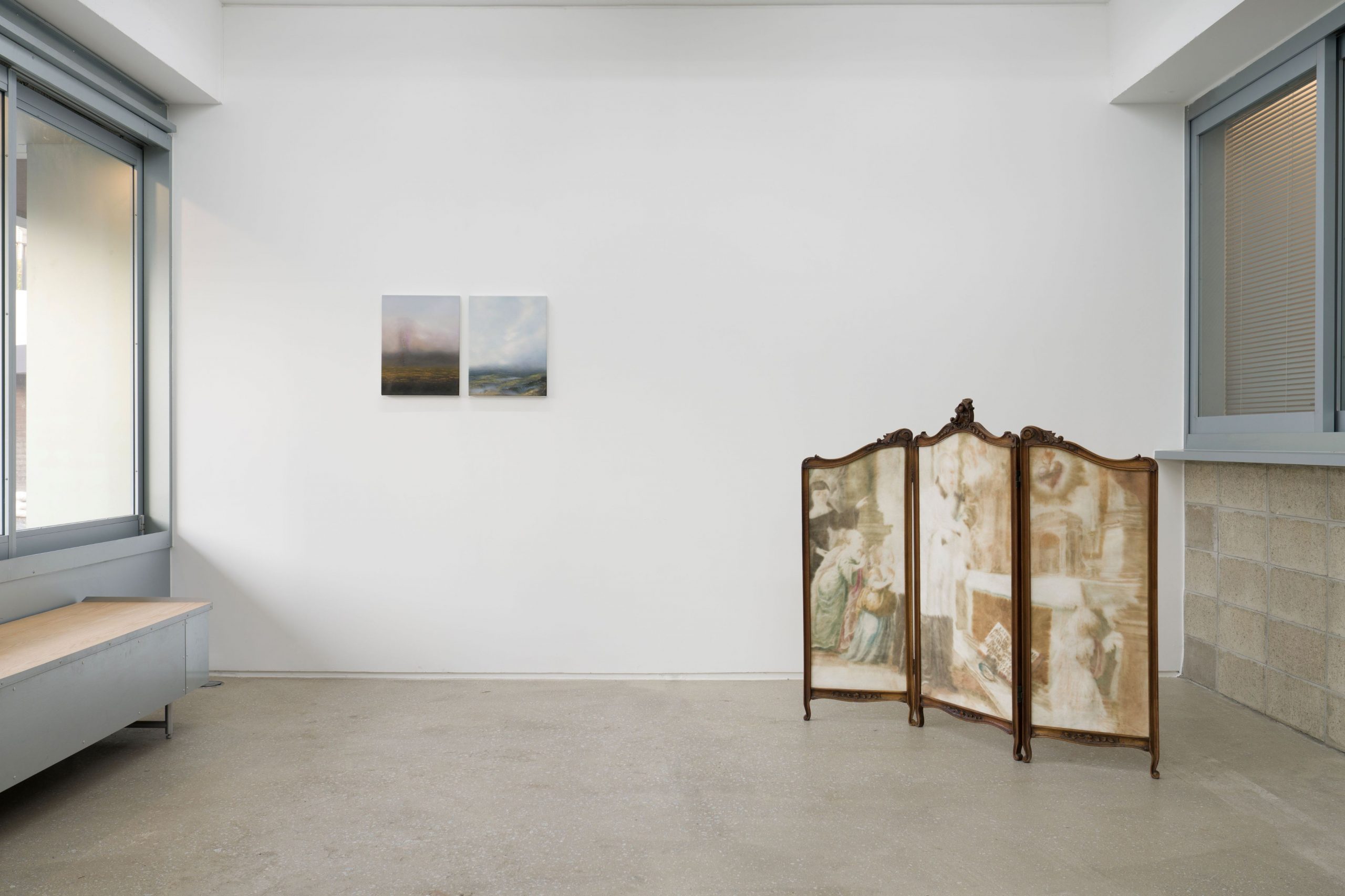
Installation View_Para-Jagi
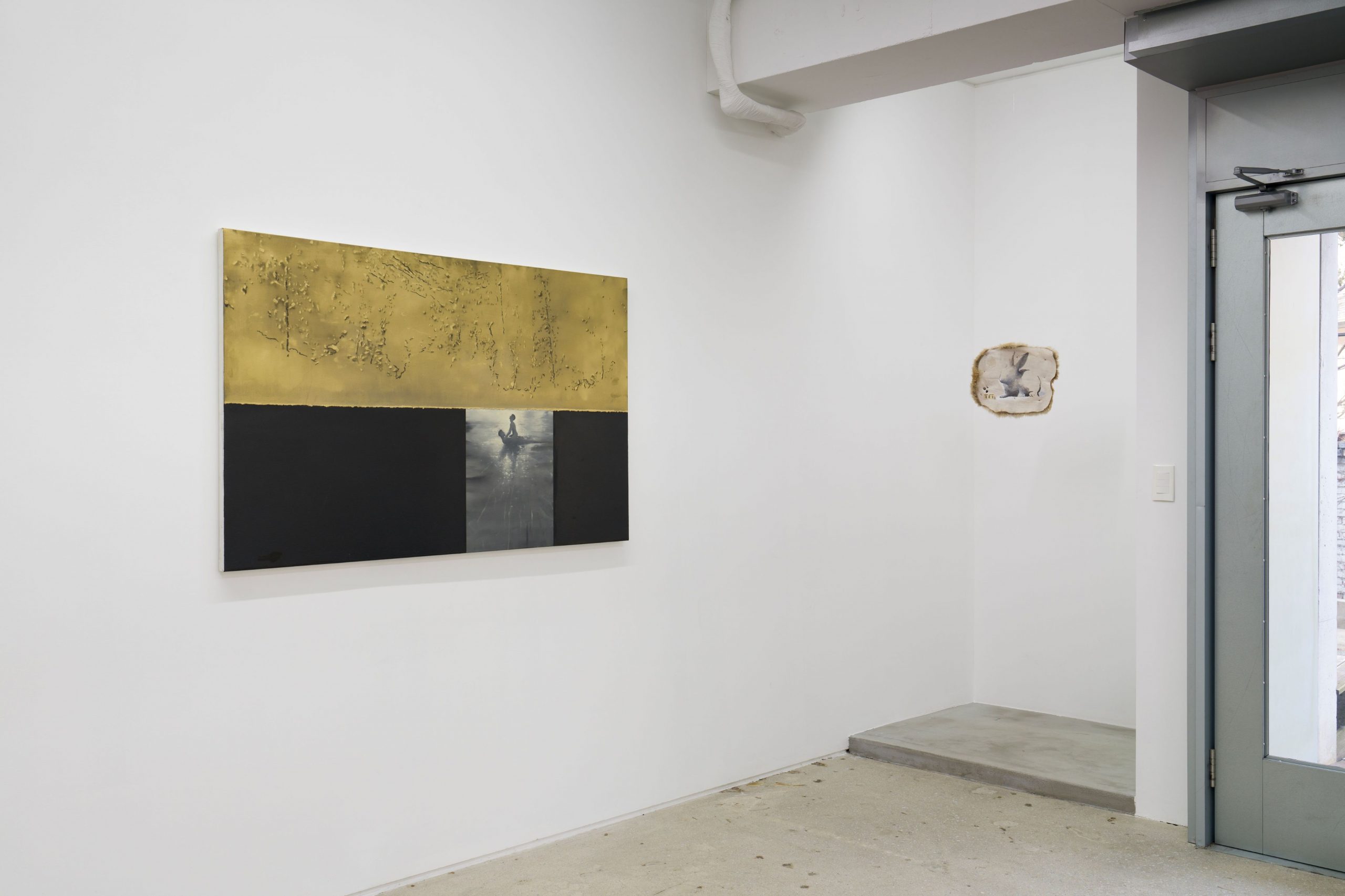
Installation View_Para-Jagi
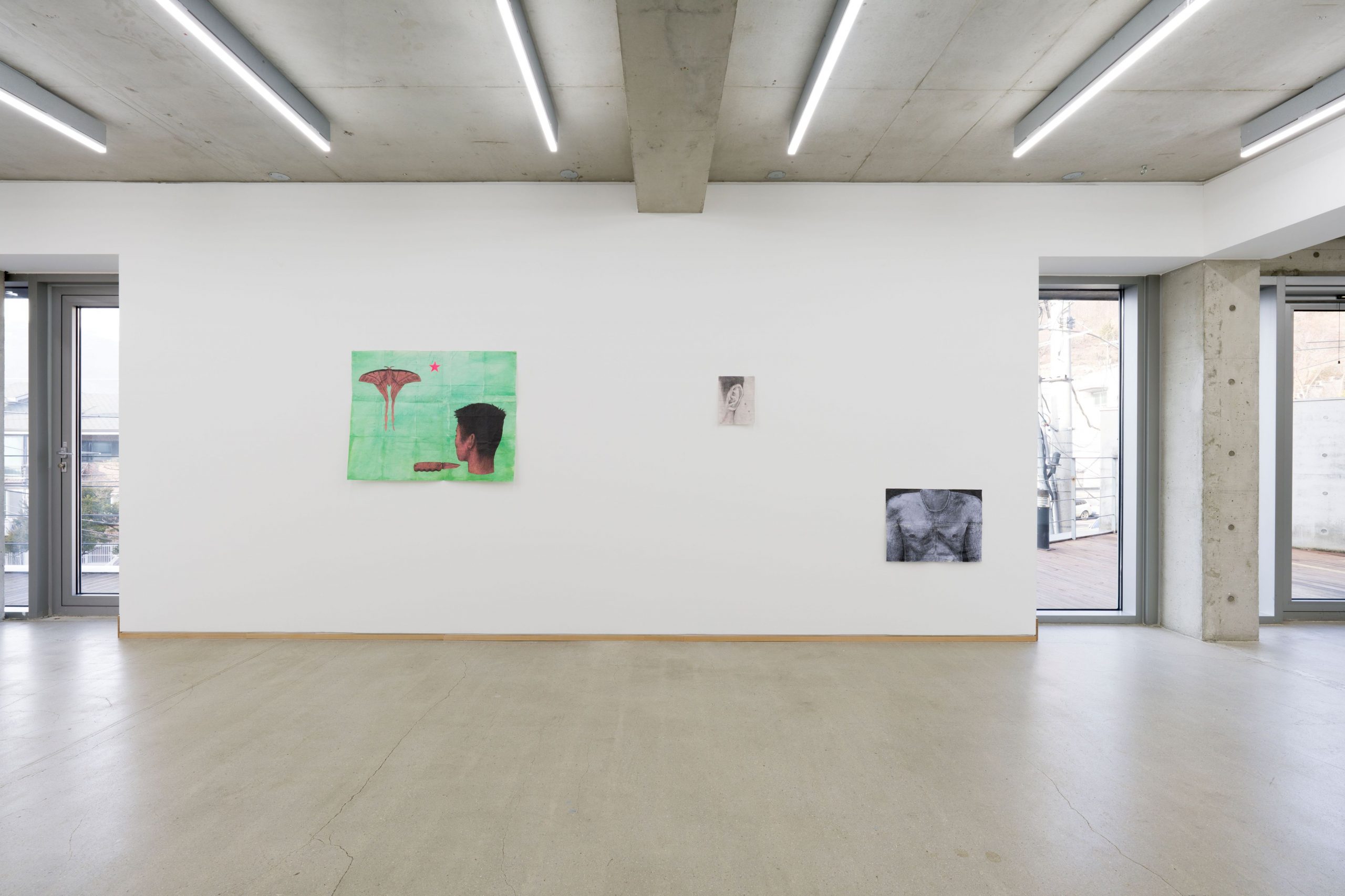
Installation View_Para-Jagi
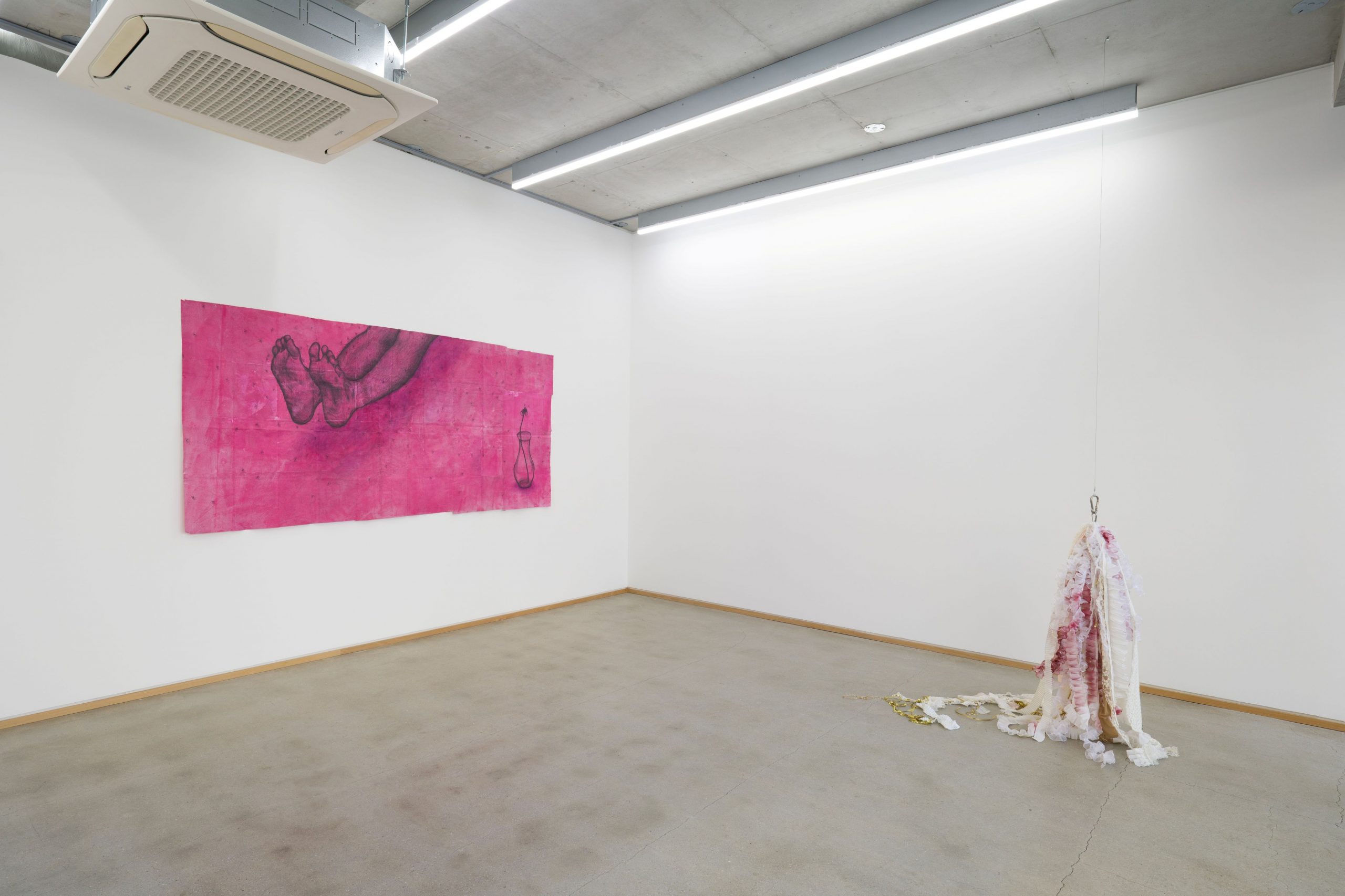
Installation View_Para-Jagi
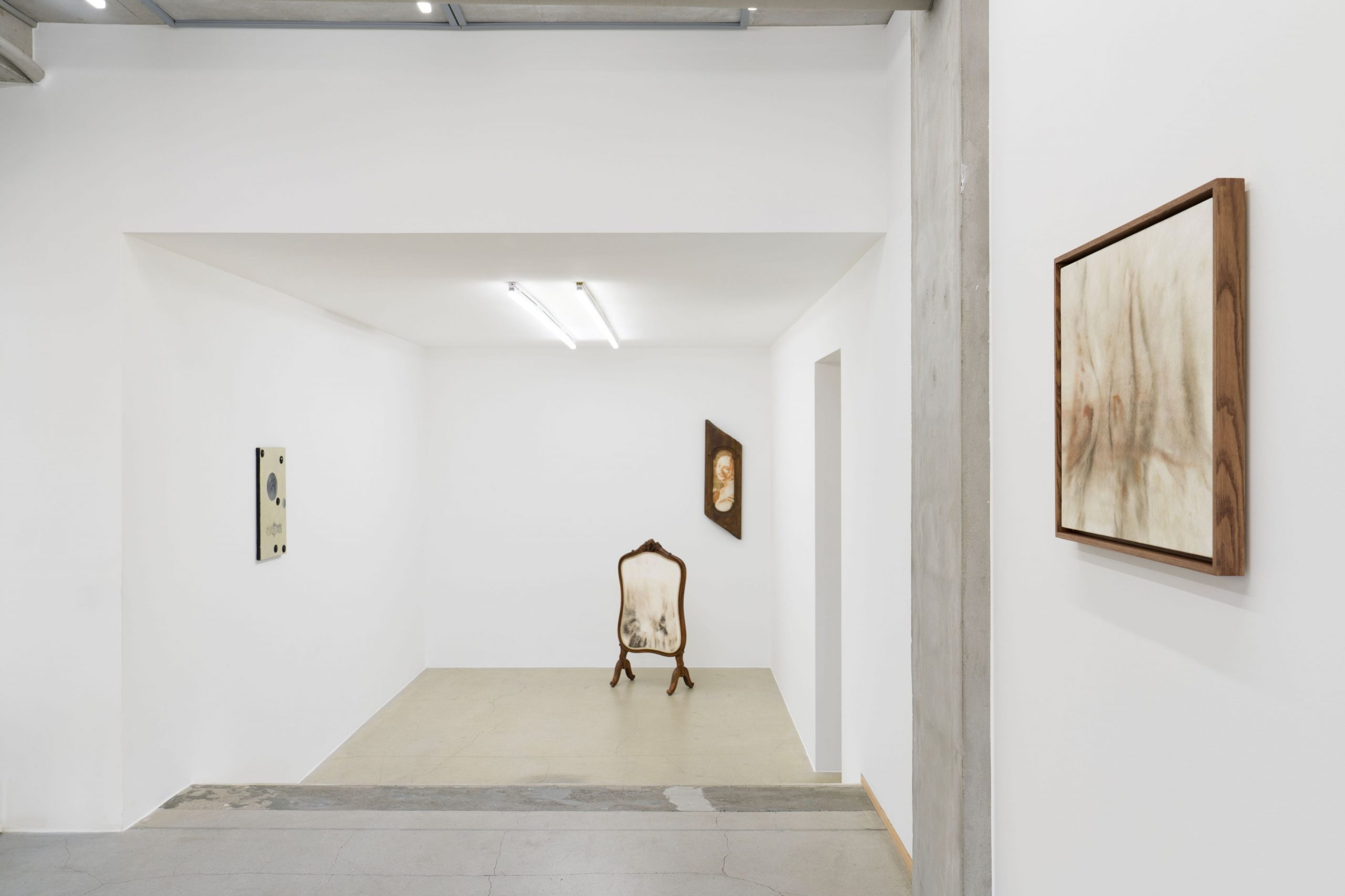
Installation View_Para-Jagi