Past
Apple or Bird
사과 혹은 새
2025. 8. 30. - 2025. 9. 27.
![[이코즈] 홈페이지](https://a-lounge.kr/wp-content/uploads/2025/08/이코즈-홈페이지.jpg)
‘사과 혹은 새’, 그 경계적 사유
이코즈의 그림은 꿈에서 소환된 이미지와 기하 패턴의 조합으로 가득하다. 그의 구상과 추상적 언어는 서로 중첩되어 침투하고, 때로는 선회하면서 명확한 의미 해석을 방해한다. 얼굴 옆 모습은 어느새 도형을 감돌아 흐르고 물수제비를 뜨는 낭만적 행위는 줄무늬 위에서 납작해진다. 사다리 타는 인물이 돌연 나무 넝쿨 위에서 도형화되고 창고 안 농기구는 화면을 구획하는 패턴이 되며, 수영 선수가 수면 위로 그려내는 파동은 화면 위에 파장을 일으킨다. 알 듯 모를듯한 이미지들의 접합과 교란 상태. 그것은 꿈과 현실 사이에서, 그리고 실재와 회화 사이에서 작가가 자신만의 조형 언어를 모색한 결과다.
작가는 언어적 도구와 비언어적 도구 모두를 참조하고, 구체적 이미지와 그와 상반된 기하 추상 간의 경계적 사유 속에서 기억 재편과 회화적 재편을 시도한다. 우선 그의 화면은 언어적 기록에서 시작된다. 작가는 어린 시절 기억에서 비롯된 꿈을 기록해 왔다. 꿈의 내용은 인과관계 없이 빠르게 기술되면서 단순한 정보 나열에 불과할 정도로 ‘갈겨진’ 단어들이 대부분이다. 그 기록은 반복된 꿈으로 인해 ‘꿈의 일지’가 되었다.1) 캔버스 위에서 서로 침투하는 파편적 이미지들, 그 위를 가로지르는 다양한 선과 면들은 ‘꿈의 일지’의 또 다른 번안이다. 그러나 유년의 기억과 관련한 꿈은 단순히 외상적 체험에 기인한 무의식의 반영에 그치지 않는다. 꿈을 언어로 기록하고 그것을 비언어적 조형 언어로 옮기는 재편 과정에는 여러 차례의 번역이 이뤄지기 때문이다. 1차 번역은 되풀이되는 꿈에서, 2차 번역은 깨어난 후 ‘갈겨진’ 독립적 단어들에서, 3차 번역은 그것을 조형 언어로 캔버스 위에 구현했을 때 일어난다. 꿈의 번안 과정은 의식의 연장인 것이다. 이후 관객에 의한 자유로운 번역 또한 기다리고 있다. 제목 외에는 딱히 자세히 설명해 주지 않는 그의 작품 앞에서 4차 번역이 이뤄지는 것이다. 작가의 설명처럼 ‘서술의 부재’로 인한 ‘새로운 서술적 상상’을 통해 이제 실제와 기억 사이의 연계성과 개연성은 더욱 느슨해진다.
기억 재편에서의 구심점은 바로 경북 포항시 북구 죽장면에 위치한 할머니 집이다. 그 근처에 있는 상‧하옥계곡이 있는데, 그곳 여름은 피서객으로 붐비고, 그들의 텐트가 공간을 점유한다. 어린 시절 작가의 눈에 그들은 호기심과 관찰의 대상이었다. 물구경 하러 온 사람들을 ‘구경’하던 어린아이는 그들의 경험에 동참하기 어려웠다고 한다. 그 기억은 성인이 된 후 반복적으로 꿈에 나타나게 된다. 그림 위를 가로지르는 드레이퍼리는 파편화된 기억을 포착하기 위해 작가가 선택한 꿈의 단서, 즉 텐트와 타프다. 죽장면 계곡을 뒤덮던 그 장막적 연출은 피서객들의 한시적 즐거움과 여유를 보장하지만, 어린 현지인에게는 시공간적 괴리감을 강화할 뿐이었다. 작가는 캔버스 위를 가르는 그 장막들을 통해 화면을 구획하기 시작한다. 그 회화적 번안은 2차 번역 때와는 달리 ‘갈겨진’ 상태가 아니다. 심지어 그는 흔한 디지털 편집 기능도 사용하지 않는다. 떠오른 이미지들을 포착하기 위해 그는 제작 단계마다 작품 이미지를 출력하고, 그 위에 손으로 수차례 도안을 고안한다. 이는 ‘음절과 문장, 문단의 구분 없이 적혔고 오타와 알아들을 수 없는 언어들로 가득’한 꿈의 일지를 윤색하는 과정이다. 피서객의 일시적 차양막은 그의 캔버스 위에서 심리적 장치로 소환되면서, ‘긴장된 심리와 불안함을 표상하는 장치’이자 심리적 파동으로부터의 방수포, 즉 안전막이 된다. 즉 감정 조율에 미숙했던 어린 시절의 기억 체계를 재편하는 과정에서 감정 번역으로 재조직한 것이다.
여행객들의 찰나적 유희를 보장하는 연극적 장막은 세상과 자신의 관계를 탐색하는 장치이기도 하다. 이는 첫 작품인 <바라보다> 시리즈에서 감지된다. 작품 속 인물은 성별, 나이, 직업 등 누군지 간파하기 어려운 존재다. 바로 얼굴 혹은 몸을 휘감은 천 때문이다. 그 ‘미지의 존재’는 정작 ‘바라’보고자 하는 의지조차 없어 보이지만 천을 방어막 삼아 자의식의 탐색을 시도한 것이다. ‘언캐니한 감정을 연출’한다는 작가의 설명에서도 알 수 있듯이 익숙하고 당연한 것을 생경하게 하는 그 시도는 경계적 사유에서 가능하다. 의식과 무의식, 현실과 꿈, 인간과 미지의 존재 사이의 모호한 경계에 대한 초기 인식은 <최정자할머니댁 현관에 감나무 2그루와 아궁이와 담장 그리고 클레마티스>(2023)에서 중심인물의 모습을 빌어 보다 구체화된다. 그의 몸을 휘감고 있는 천 위로 두 사람의 서로 다른 시선이 교차하는데, 이는 평면적 요소와 함께 ‘다양한 시선의 이동을 유도하는 의도적 장치’가 된다. 심리적 방수포이자 차양막이었던 그의 휘장은 뵐플린 식의 말러리슈적 구현 속에서 감정 번역 이상의 새로운 번역을 꾀하게 된다.
이제 이코즈의 시선은 이상의 언어와 비언어적 도구의 경계 위에서 회화적 재편에 나선다. <물잠자리가 되어 바라본 이야기>는 물잠자리의 시선으로 바라본 세상이다. 인간이 아닌, 비인간의 시선을 통해 바라본 세계는 형상과 윤곽이 해체되고 혼재된 상태다. 그 시도는 기존의 시각 경험 및 언어에 질문함으로써 전통적인 회화적 재현 체계에 틈새를 벌려놓는다. 이를 계기로 작가는 꿈속에서 들었던 사과 먹는 소리가 실상은 자신이 자는 방 창문 앞 새소리였다는 ‘사과 혹은 새’에서와 같이, 점차 감각과 기억이 트랜지션되는 경계적 사유를 본격화한다. 동시에 구체적 형상 주위로 선과 도형이 서로 중첩/침투하는 화면은 회화의 본질적 속성, 즉 평면성을 환기시킨다. 구상과 추상 언어의 혼용은 리듬감, 강약 효과, 이질적 표면처리, 경중의 차이 등을 발산하며 회화라는 재현 체계가 결코 시각에만 국한된 것이 아님을 설파한다.
회화적 재편은 이질적 감각의 혼용 속에서 한층 가속화된다. 당겨짐과 소원함, 두툼함과 평평함, 묵직함과 가뿐함 사이를 경유하는, 그의 균형 잡힌 연출은 감정 번역 이상의 긴장과 이완 상태를 유도한다.2) 또한 현실과 꿈, 의식과 무의식 외에도 안과 밖, 실재와 이미지의 경계가 와해된다. 실제로 우리는 작품 제목을 단서로 백발의 할머니, 가옥, 사다리, 삽, 옥수수, 싱크대 수전 등 구체적 형상을 통해 작가의 개인적 서사를 읽어내고자 한다. 하지만 이내 반복적 패턴과 평면 처리는 우리의 추적을 방해한다. 언어적‧비언어적 도구를 불문하고 이러한 시도와 좌절은 번역의 불완전성에서 이미 예견된 것이다. 특히 이코즈 식의 구상과 추상의 선환적 혼용 방식은 질 들뢰즈식의 아플라(aplat), 즉 ‘공간화하는 물질적 구조’3)를 통해 재현에 대해 질문하는 비언어적 전략이다. 마치 베이컨의 회화 속 ‘납작한 원통의 내부’에 감금된 그로테스크한 형상처럼, 인물과 기하 패턴이 혼재된 이코즈의 이미지는 더 이상 장소가 아닌 ‘사건의 문제’가 된다. 즉 구상과 추상이 중첩된 화면은 다양한 참조 속에서 회화적 경계를 넘나드는 장치가 되는 것이다. 또 다른 비언어적 장치는 바로 그의 작품 분위기를 주도하는 파랑과 주황의 병치다. 그의 매체적 실험은 색채의 대비 효과를 통해 경계적 사유를 강화한다. 그의 작업은 상당히 구체적인 장소에 대한 기억에 기반하지만, 파랑과 주황의 색채대비를 통해 비현실적 공간을 연출한다. 그러나 ‘사과 혹은 새’의 사이 감각을 시각화하듯, 파랑과 주황의 보색적 대비는 실재와 재현 간의 암묵적 간극을 환기시킨다. 본래 회화는 다시 현현하는 과정에서 도저히 메울 수 없는 시간적, 물리적 극간이 존재한다. 작가는 캔버스 전면과 측면을 보색 대비를 이루는 색채로 채운다. 그 효과는 영화 스크린의 얇은 막과 유사하다. 꿈의 흔적과 패턴의 조합은 영화 속 콜라주적 기법을 연상시키고, 캔버스 프레임에 칠한 파랑 혹은 주황은 영화적 여운에 취한 우리의 현실감각을 건드리는 엔딩 크레딧과 닮았다. 꿈이 기술된 이코즈의 회화는 회화의 정태적 개념에 틈새를 벌리는 자기 참조적 번안 매체인 것이다.
작가는 한 인터뷰에서 ‘기록이라는 강박적인 삶의 태도’를 설명한 바 있다. 꿈과 기억을 언어로 채집하고 비언어적 도구로 번안하는 그의 강박적 과정은 형태적 상응이나 내러티브적 전개를 비껴간다. 단순한 기록이 아니라 기술하는 것, 그것은 한쪽에 매몰되지 않기 위한 의지의 발현이다. 이코즈의 기술 과정은 이러한 경계적 사유를 통해 끊임없이 기억과 이미지를 재편한다. 그 수축과 이완 속에서 작가는 전통적인 재현 체계를 고수하는 대신 회화 자체에 대한 우리의 보편적 개념에 질문을 던진다. 언어와 비언어의 혼용으로 인한 작가의 의도적 오역 과정은 치유라는 또 다른 차원의 체계를 재편해간다. 사실 작가는 첫 개인전에서부터 작품을 ‘방공호’로 표현했다. 이코즈는 필명에 담긴 의미처럼 심적 치유를 향한 작가적 신념을 고수하며 그 실천적 번역 행위를 지속해 가고 있다. “계곡”, “마을”, “장마가 온 계곡과 마을”로 주제를 나눠 진행되는 이번 전시 또한 서로 다른 영역과 의미 간의 뒤섞임과 교환, 즉 그 경계적 사유를 통해 진정 안온한(코지의 의미로) 방공호인 것이다.
1) 본 텍스트는 작가의 작업 노트에서 참고한 내용을 ‘’로 구분했다.
2) 이는 그가 참조하는 작가들과도 접점을 이룬다. 이코즈의 화면은 로날드 브룩스 키타이 같이 일상적이면서도 프란시스 베이컨만큼 해체적이다. 한편으로 피터 필립스처럼 팝적인가 하면 프랭크 보울링처럼 추상적이고 납작하다.
3) 질 들뢰즈(2002), 『감각의 논리』, 하태환 역, 민음사, 2008, p.23.
글/ 박윤조 (미술사학자)
𝘼𝙥𝙥𝙡𝙚 𝙤𝙧 𝙗𝙞𝙧𝙙: Thinking on the Threshold
Lee Koz’s paintings engage in a dialogue between disparate worlds—the dream-like and the geometric, the figurative and the abstract. These visual languages do not merely coexist; they intermingle and overlap, blurring the clear lines of meaning. A profile of a face morphs into a wandering line around a shape; the romantic splash of skipping stones flattens into a stripe. A figure on a ladder dissolves into a geometric form among tree vines, farm tools in a shed become patterns dividing the canvas, and the ripples created by a swimmer on the water’s surface reverberate throughout the painting. This fusion of the familiar and the strange, of image and disruption, reflects her search for a unique visual language, residing in the liminal space between dream and reality and between object and painted representation.
Lee Koz draws from both verbal and visual languages, engaging in a boundary-crossing practice between concrete imagery and abstract form. Through this process, she reconfigures memory and reimagines the act of painting itself. Her visual process begins with written records—dreams originating from childhood memories. These dreams, documented in bursts without logical sequence, often appear as “scrawled” notations—words jotted down almost unconsciously. Over time, this practice evolved into a dream journal. On canvas, these fragmentary images and the crisscrossing lines and planes form another translation of those dream logs. But these dreams are more than unconscious echoes of early experience; they undergo multi-layered translation: first as recurring dreams, second as fragmented language upon waking, and third as visual transposition onto canvas. This ongoing reinterpretation transforms the dream from a mere subconscious phenomenon into an extension of conscious thought. A fourth translation takes place before the work—through the viewer’s open-ended interpretation. As the artist explains, the absence of narrative invites a new narrative imagination, further loosening the link between memory and reality.
Central to this reconstruction of memory is her grandmother’s house in Jukjang-myeon, Buk-gu, Pohang-si, Gyeongbuk. Nearby, the Upper and Lower Valley streams attract crowds of vacationers each summer, with tents and tarps filling the landscape. As a child, the artist saw these visitors as curious figures, but their experience felt inaccessible. The memory of “watching” them—yet feeling apart—reappeared in dreams throughout her adult life. The draperies crossing her paintings are visual metaphors for tents and tarps —symbols of childhood dissonance and psychological distance. What once offered fleeting comfort to tourists became markers of spatial and emotional alienation for the young local. By integrating these drapes into her canvas compositions, Lee Koz begins reconstructing her inner landscapes. These later visual translations differ from the hastily recorded dreams—they are no longer scrawled but meticulously designed. She avoids digital editing entirely, printing drafts of her paintings and manually sketching over them multiple times. This laborious process mirrors the act of refining her dream journal—originally filled with garbled phrases, typos, and indecipherable language. The temporary shelters of summer visitors are reimagined on canvas as psychological devices—both representing tension and acting as protective screens, emotional tarps shielding waves of anxiety. At its core, her work translates emotion—reshaping childhood memories formed when the ability to understand and regulate feelings was still developing.
These theatrical drapes—ephemeral shelters for the vacationers’ delight—serve as dramatic devices that blur and unsettle the boundaries of painting, enabling the artist to explore her place in the world. This theme first appears in her <Gaze> series, where figures are concealed beneath draped fabric that hides their age, gender, and identity. These unknown beings appear indifferent to “gaze” or look outward, instead using the cloth as a screen for inward reflection. As the artist notes, her aim was to evoke an uncanny feeling—to make the familiar appear strange—a key concept in her threshold thinking. Her early exploration of ambiguity—between consciousness and unconsciousness, reality and dream, human and unfamiliar—continues in her 2023 work Choi Jungja’s House Entrance - Two Persimmon Trees - Hearth - Wall - Clematis. Here, a central figure wrapped in cloth intersects with two gazes. These overlapping viewpoints serve as an intentional device to induce various shifts in perspective across multiple planes. The drapes, once metaphors for psychological tension, now become fluid, expressive brushstrokes echoing Heinrich Wölfflin’s malerisch (painterly) style.
Lee Koz now directs her gaze toward the boundary between language and non-language, venturing into new realms of visual reinterpretation. Gaze - Through the Eyes of a Damselfly presents the world from a non-human perspective, where shapes dissolve, outlines blur, and spatial relationships destabilize. In this shifting terrain, familiar rules of seeing and speaking no longer apply. As in the title of this exhibition Apple or Bird, a sound she once believed in a dream was the crisp bite of an apple turned out to be the chirping of a bird outside her window. These subtle misalignments become the core of her work where a transition of sensation and memory occurs. On canvas, geometric forms intertwine with figurative images, transforming painting’s essential flatness into a subject itself. Her blending of abstraction and figuration—guided by rhythm, surface tension, and tonal nuance—reminds us that this visual language extends well beyond sight.
Lee’s painterly reconstruction accelerates through the blending of disparate sensations that might never meet in ordinary life. Her careful balance—between closeness and distance, thickness and flatness, weight and lightness—creates a dynamic of tension and release that not only exceeds emotional translation but also opens a deeper dialogue about the nature of painting itself. In her work, dreams and reality merge, and the boundaries between inside and outside, the real and the represented, begin to collapse. Initially, viewers may rely on hints in her titles—elderly woman, house, ladder, shovel, corn, faucet—but recurring patterns and flatness quickly interrupt straightforward readings. These detours are intentional, as translation is never complete. Her oscillation between figuration and abstraction becomes a nonverbal language similar to Gilles Deleuze’s aplat—a method of shaping images through space and materiality. Like the distorted figures trapped inside Francis Bacon’s translucent flat cylinders, Lee’s fusion of body and geometry transforms the canvas into a stage where events unfold rather than a fixed place. Thus, her canvases become instruments for navigating and disrupting painting’s very boundaries.
Another key nonverbal element in Lee’s work is her frequent juxtaposition of blue and orange. This vivid contrast intensifies her exploration of boundaries. Though grounded in specific memories of place, her use of colors transforms these spaces into dreamlike, even surreal realms. And yet, much like a visualization of the 'Apple or Bird' experience, the complementary contrast of blue and orange points to the implicit gap between what is real and what is represented. Painting, by nature, is haunted by the impossibility of fully recapturing its subjects—a temporal and spatial distance that can never truly be bridged. Lee Koz extends this idea by painting not only the canvas surface but also its edges with contrasting hues. This produces an effect that is similar to the delicate curtain of a movie screen. The collage-like dream patterns evoke cinematic techniques, and the painted frame edges feel like closing credits, returning us to the present. These dream-inspired works are not static images but self-aware translations—opening fractures within the very concept of painting itself.
In an interview, Lee Koz once described her practice as “driven by a compulsion to record.” Yet this urge—to collect memories and dreams in words and then transform them visually—eschews both straightforward storytelling and fixed symbolism. For Lee, it is less about recording and more about transcribing, a deliberate refusal to be confined to a single mode of expression. Through what she calls threshold-based thinking, she continually reorganizes both memory and image. This constant rhythm of contraction and expansion does not merely preserve traditional representation—it questions painting’s very nature. Her intentional mistranslation between language and image transforms painting into a form of healing. Since her debut solo exhibition, Lee has likened her works to “air-raid shelters.” True to her pseudonym—a blend of “eco” and “cozy”—her works are deeply committed to offering psychological refuge. This exhibition, divided into themes of “Valley,” “Village,” and “The Valley and Village in Monsoon,” becomes exactly that: a cozy shelter created through the mingling and crossing of boundaries and meanings. It becomes a space for the threshold thinking that defines her work.
Writer/ Park Yunjo (Art historian)
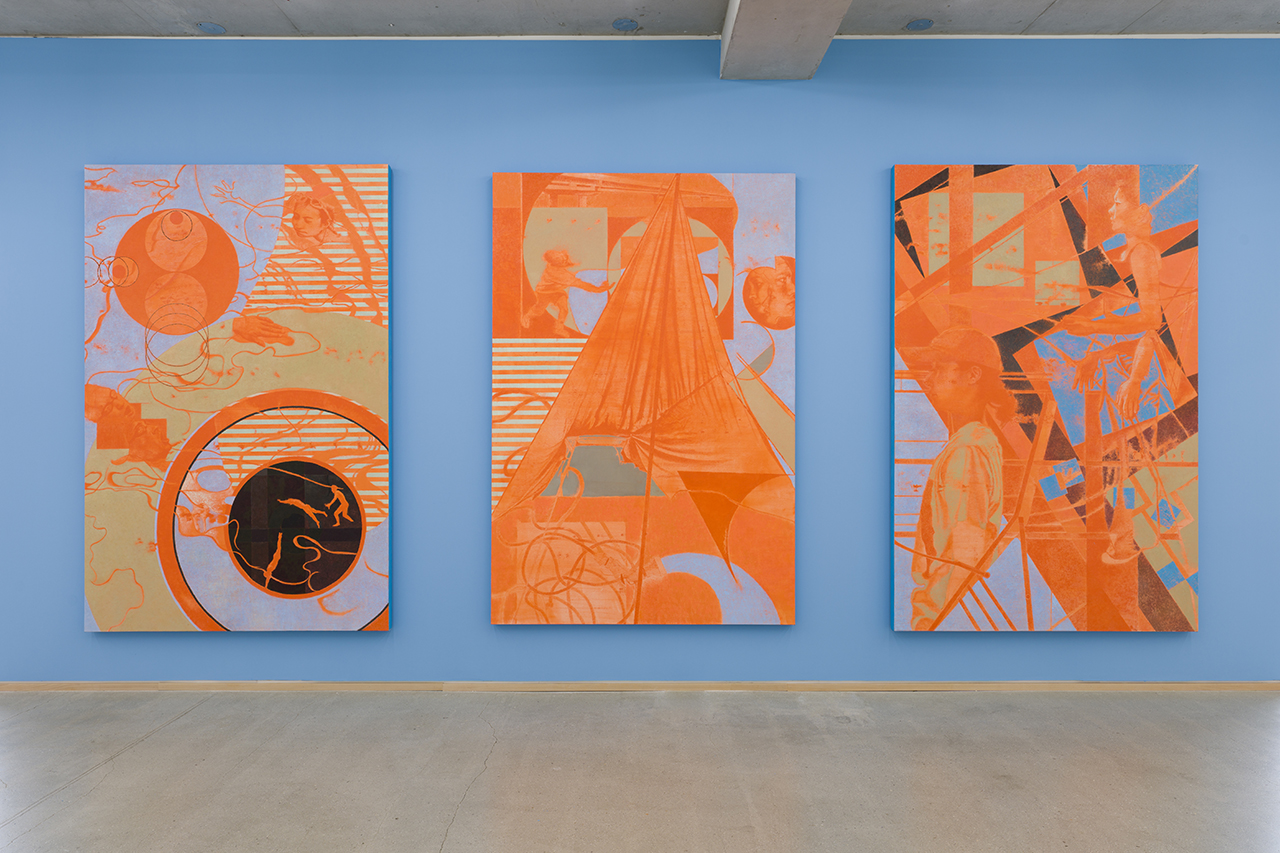
Installation View_Apple or Bird
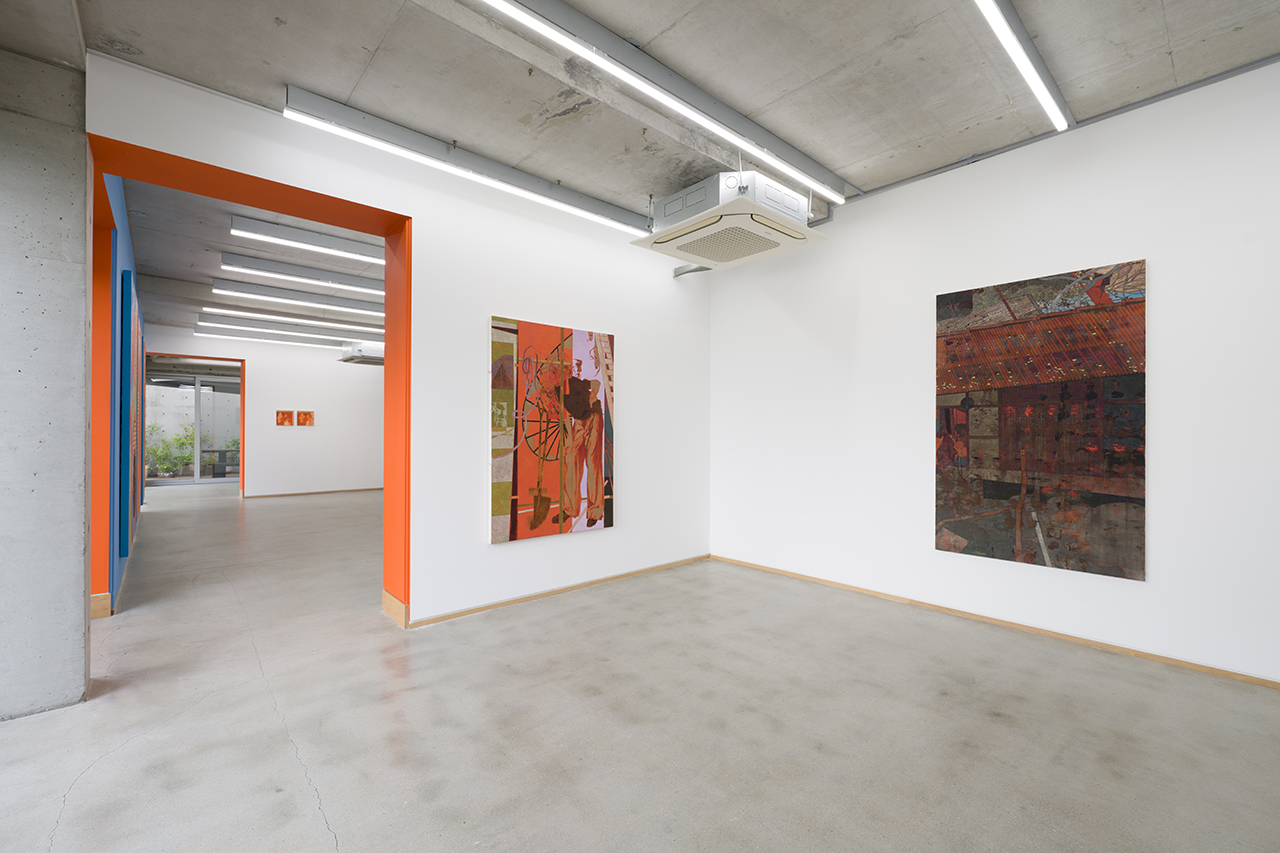
Installation View_Apple or Bird
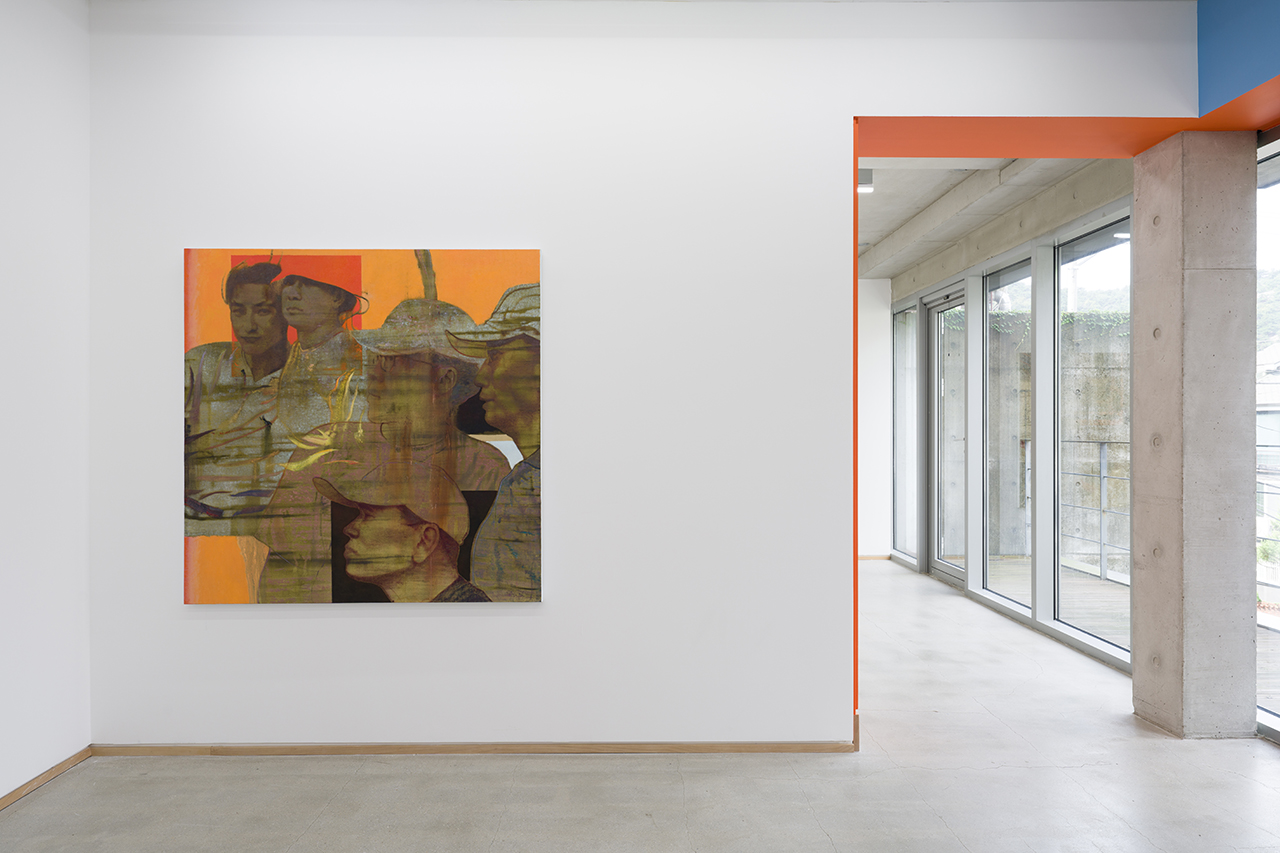
Installation View_Apple or Bird
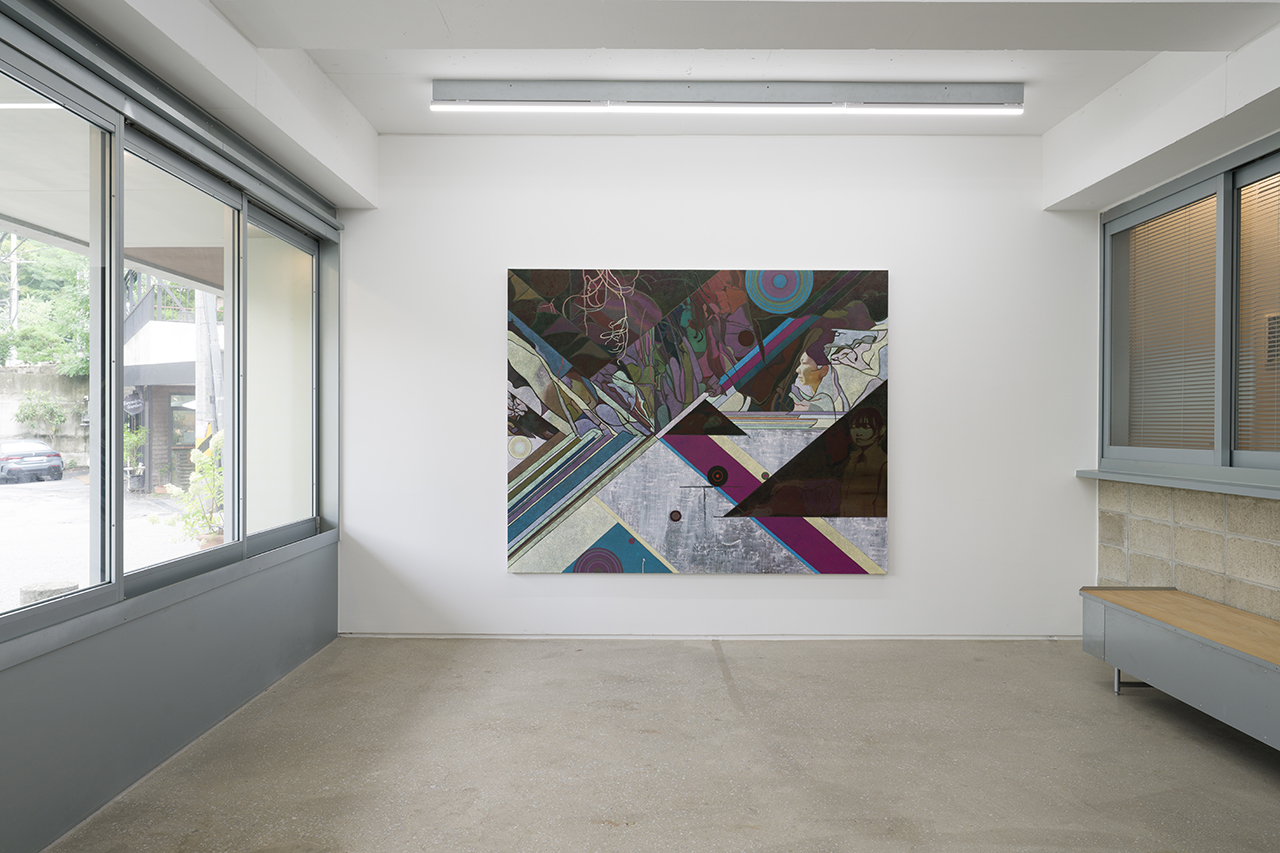
Installation View_Apple or Bird
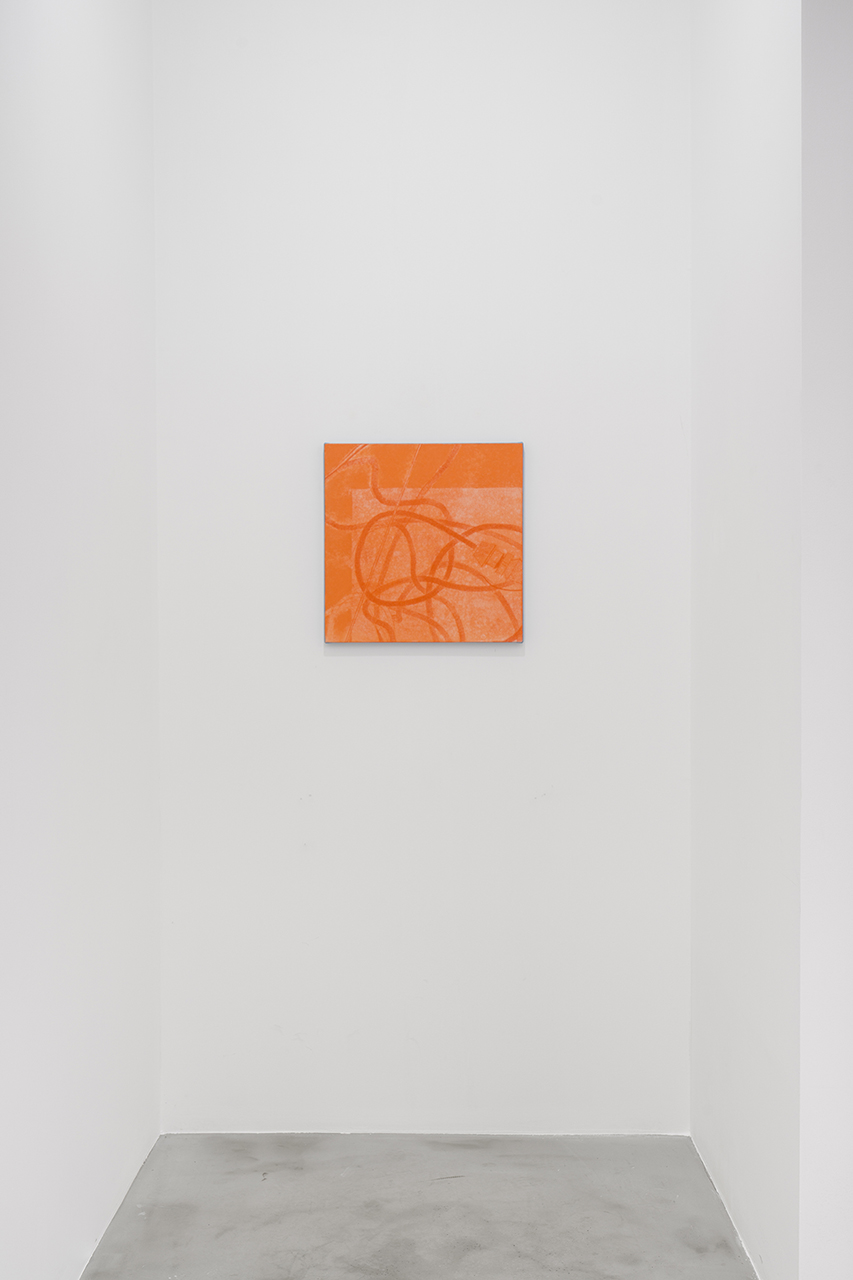
Installation View_Apple or Bird